
Understanding the New EES Border Checks for US and UK Travelers in Europe
Written with artificial intelligence.
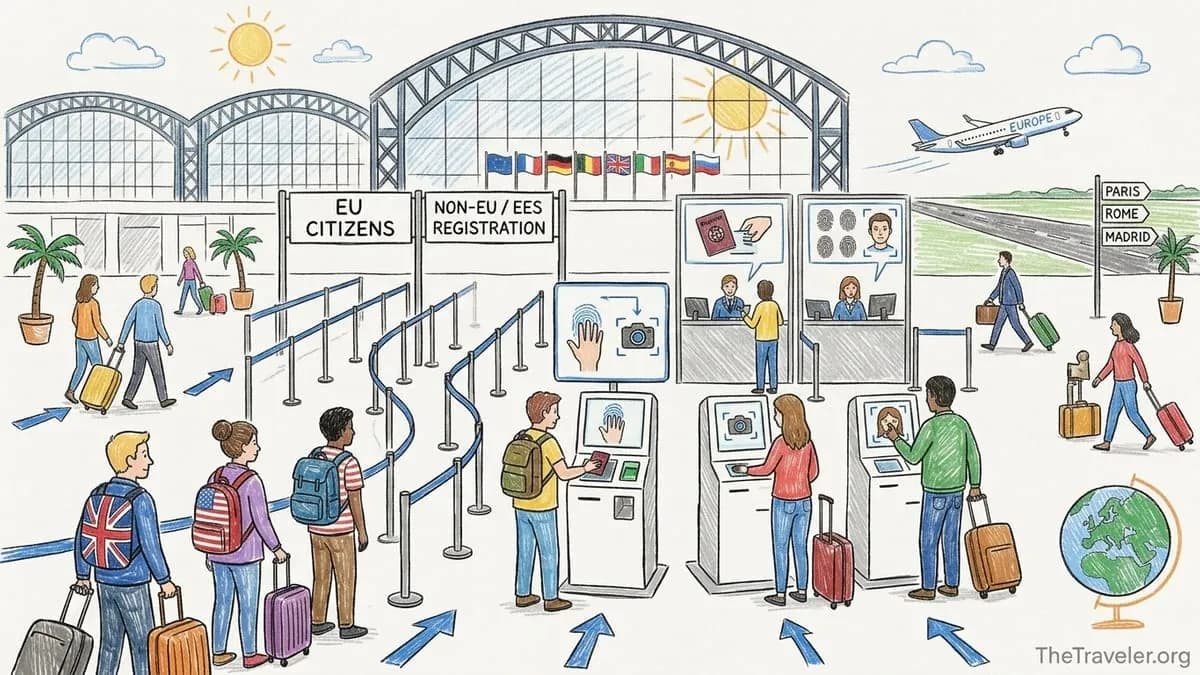
The European Union's Entry/Exit System (EES) is now operational, changing how American and British travelers enter the Schengen area. This system replaces traditional passport stamps with biometric checks, tracking arrivals and departures across 29 member countries since its full launch on April 10, 2026.
Overview of the EES
The Entry/Exit System (EES) is a digital border management initiative implemented by the European Union for non-EU nationals visiting the Schengen area for short stays. This system eliminates the need for passport stamps, instead recording biometric data and tracking the exact time and place of entries and exits. Currently, EES is applicable in 29 Schengen countries, including popular destinations like France, Spain, and Germany.
Key Features of EES
Starting from April 10, 2026, EES will operate at all external borders of the Schengen area. Travelers from the US and UK can expect to be registered in EES upon their first entry. It is important to note that this system does not affect existing visa regulations, allowing visa-exempt travelers to stay in the Schengen area for up to 90 days within a 180-day period without needing prior electronic authorization.
Registration Process
Upon entering the Schengen area, travelers will undergo a process that includes:
- Scanning their passport
- Taking a facial image
- Capturing four fingerprints from each hand
This initial registration may add time to the border crossing, with reports of wait times reaching up to two hours during peak periods. However, subsequent entries will typically be quicker as travelers will already be in the system.

Exceptions to EES
Certain groups are exempt from EES, including US and UK citizens with residence permits from Schengen states. These individuals will not be required to register for short stays and can show their residence cards instead. Additionally, movements within the Schengen area do not require EES registration, treating internal travel as domestic.
Conclusion
Travelers should prepare for the new EES process when entering Europe, particularly at major airports. Understanding this system will help ensure smoother transitions into the Schengen area and adherence to travel regulations. For further information, travelers are encouraged to check official EU sources regarding EES and any specific entry requirements.